
Your complete 2025 guide to GST Input Tax Credit (ITC) rules: eligibility, blocked credits, ITC reversal, invoice matching, compliance tips, FAQs, and common mistakes.
Introduction
The Goods and Services Tax (GST) has transformed India’s indirect tax landscape, and one of its most beneficial features for businesses is the Input Tax Credit (ITC) mechanism. ITC helps businesses reduce their overall tax burden by allowing them to claim credit for GST paid on purchases and use it to offset GST payable on sales. This ensures that tax is levied only on the value added at each stage of the supply chain—preventing cascading, improving cash flow, and encouraging tax compliance across vendors and distributors.
However, as GST has matured, the ITC rules have become stricter, especially with the rise of fraudulent invoices, non-compliant suppliers, and mismatches in returns. The GST Council and CBIC have continuously refined ITC provisions to make the system more robust. As a result, in 2025, businesses must adhere to precise eligibility norms, maintain clean documentation, and align their ITC claims fully with GSTR-2B and supplier filings.
This comprehensive guide explains the complete GST ITC Rules for 2025, including eligibility conditions, invoice matching requirements, blocked credits under Section 17(5), reversal rules, documentation, and the most common ITC errors taxpayers commit—along with accurate section and rule references via continuous footnotes.
1. What Is Input Tax Credit (ITC)?
Input Tax Credit (ITC) refers to the credit of GST paid on inputs, input services, and capital goods used for business purposes(Supported by Purchases Bills). ITC allows taxpayers to reduce their output tax liability (Liable to pay as per sales bill raised) with the tax already paid on purchases.
This prevents cascading and keeps the supply chain tax-efficient¹.
Input means Input of goods as a raw material or semi finished or finished goods for manufacturing industries, Finished Goods for trading businesses.
2. GST ITC Eligibility Rules for 2025
For FY 2025, you can claim ITC only if all the following legal conditions are met. Failure of even one condition results in ITC denial or reversal.
2.1 You Must Be a Registered Taxpayer
ITC can be availed only by a registered person under GST².
Unregistered persons and composition dealers are not permitted to claim ITC.
2.2 Goods/Services Must Be Used for Business Purposes
The inputs or services must be used in the course or furtherance of business³.
Personal consumption or non-business use automatically disqualifies ITC.
2.3 You Must Possess a Valid GST Invoice
A valid invoice must contain all particulars prescribed under GST—GSTIN, invoice number, date, taxable value, HSN/SAC, tax amount, and rate⁴ ⁵.
Without a compliant invoice, ITC is not eligible.
2.4 Supplier Must Upload Invoice in GSTR-1 (Reflected in GSTR-2B)
This is one of the most critical ITC rules for 2025.
You can claim ITC only if the supplier has uploaded the invoice in GSTR-1 and it appears in your GSTR-2B⁶ ⁷ ⁸.
If the supplier is non-compliant, your ITC gets blocked automatically.
2.5 You Must Receive the Goods or Services
ITC is valid only after the goods or services are actually received. Delivery to a third party on your direction also qualifies⁹.
2.6 Supplier Must Pay Tax to the Government
Even if you have paid the supplier, ITC can be denied if the supplier has not paid GST to the government¹⁰.
This encourages buyers to work only with compliant vendors.
2.7 You Must File Your Returns (GSTR-3B)
You cannot claim ITC until you have filed your monthly or quarterly return¹¹ ¹².
Late filing can temporarily block ITC.
2.8 Payment Must Be Made Within 180 Days
If you do not pay the supplier within 180 days of invoice date, ITC must be reversed along with interest¹³ ¹⁴.
You may reclaim the ITC after payment.
3. Key GST ITC Rules for 2025 (Latest Changes)
2025 continues the government’s emphasis on automation, real-time data matching, and compliance-linked ITC.
3.1 Mandatory 100% Invoice Matching with GSTR-2B
Provisional ITC is completely removed.
You can claim ITC only for invoices present in GSTR-2B¹⁵.
This shifts compliance responsibility onto recipients to monitor supplier behavior.
3.2 ITC Time Limit: 30 November of the Following Financial Year
ITC related to a financial year must be claimed on or before 30 November of the following year¹⁶.
After this date, ITC is permanently forfeited.
3.3 ITC May Be Restricted for Supplier Non-Compliance
The GST portal can automatically restrict ITC if a supplier is marked as “risky,” does not pay taxes, or files inconsistent returns¹⁷ ¹⁸.
This prevents fake invoicing and tax evasion.
3.4 CSR ITC Rules for FY 2025
Not all CSR spending qualifies for ITC.
Only statutorily mandated CSR expenses may qualify, subject to conditions¹⁹ ²⁰.
Voluntary CSR contributions are not eligible.
3.5 ITC on Reverse Charge Mechanism (RCM)
When you pay GST under Reverse Charge (e.g., legal service, GTA service), ITC is available only after payment of GST in cash²¹ ²² ²³.
RCM invoices require self-invoicing.
3.6 ITC Not Allowed for Goods Lost, Stolen, or Destroyed
If goods are destroyed, stolen, disposed of by gifting, or written off, ITC must be reversed²⁴.
4. Blocked Credits Under GST (Section 17(5))
Under Section 17(5), certain goods and services are permanently blocked from ITC regardless of their business use.
4.1 Motor Vehicles
ITC on motor vehicles is blocked unless they are used for:
- Transportation of goods
- Passenger transportation
- Training for driving
This restriction is specifically listed under the law²⁵.
4.2 Food, Beverages, Health Club Membership & Entertainment
ITC is blocked for the following:
- Food and drinks
- Outdoor catering
- Health club and fitness memberships
- Entertainment services
These are blocked unless the business provides the same service (e.g., hotel, airline)²⁶ ²⁷ ²⁸.
4.3 Works Contract & Construction of Immovable Property
ITC is blocked for:
- Construction of buildings
- Renovation
- Repairs
- Alterations
unless used for further supply of works contract services²⁹ ³⁰.
4.4 Goods/Services Used for Personal Consumption
Any expenditure for personal benefit is not eligible for ITC³¹.
4.5 CSR Expenditure (Optional CSR)
CSR spending not mandated under the Companies Act is treated as gifts/free supplies and is blocked from ITC³².
4.6 Goods Given as Gifts & Free Samples
Goods disposed of as:
- Gifts
- Free samples
- Promotional items
are not eligible for ITC³³.
5. ITC on Capital Goods in 2025
Capital goods generally qualify for ITC as long as they are used for business. But several rules apply.
5.1 Definition of Capital Goods
Capital goods are items used in business whose value is capitalized and depreciated³⁴.
5.2 ITC on Capital Goods Used for Business
ITC is allowed if used for taxable supplies or business purposes³⁵ ³⁶.
5.3 Depreciation Restriction
If depreciation is claimed on the GST component of capital goods, ITC cannot be claimed³⁷.
This prevents double benefits.
5.4 Reversal of ITC on Capital Goods
If capital goods are used partly for exempt supplies, reversal must be calculated under the prescribed formula³⁸.
6. ITC Reversal Rules (Critical for 2025)
You must reverse ITC under several circumstances.
6.1 Inputs Used for Exempt or Non-Business Purposes
Reversal applies when inputs or services are used partly for:
- Exempt supplies
- Non-business use
Rules 42 and 43 prescribe proportionate reversal³⁹ ⁴⁰.
6.2 Non-Payment to Supplier within 180 Days
If payment is not made within 180 days, ITC must be reversed with interest⁴¹ ⁴².
6.3 Credit Notes Issued by Supplier
When the supplier issues a credit note, the ITC must be proportionately reduced⁴³.
6.4 Goods Written Off or Lost
Goods written off due to:
- Damage
- Obsolescence
- Theft
- Loss
must trigger ITC reversal⁴⁴.
6.5 Switching to Composition Scheme
Businesses moving to composition must reverse all available ITC on that date⁴⁵ ⁴⁶
7. Documents Required to Claim ITC in 2025
To successfully claim and defend ITC during audits or departmental scrutiny, taxpayers must maintain a complete and well-organized documentation trail. GST law prescribes specific documents that are mandatory, while others are practically essential for compliance.
7.1 Tax Invoice / Debit Note
A proper GST invoice or debit note is the primary document required for availing ITC⁴⁷.
It must include:
- GSTIN of supplier and recipient
- Invoice number and date
- HSN/SAC code
- Taxable value and tax amount
- GST rate (CGST/SGST/IGST)
Incorrect or incomplete invoices are a frequent reason for ITC denial.
7.2 Proof of Receipt of Goods/Services
You must obtain and retain evidence that goods/services were delivered, as ITC is allowed only after receipt⁴⁸ ⁴⁹.
Examples include:
- E-way bill (Official Website)
- Delivery challan
- Goods Receipt Note
- Service completion certificate
- Email confirmation (for digital services)
7.3 Payment Proof
ITC on supplies is conditional upon making payment within 180 days⁵⁰. You should retain:
- Bank transfer records
- RTGS/NEFT proof
- UPI transaction slips
- Ledger confirmations
7.4 GSTR-2B
GSTR-2B is the only document that decides whether an ITC is claimable.
For each invoice, ensure:
- It appears in the correct month’s GSTR-2B
- Value matches your purchase register
- Vendor has not filed amendments that affect ITC
GSTR-2B is considered the “auto-drafted ITC statement” under GST⁵¹.
7.5 Purchase Register
Your internal purchase register must reconcile perfectly with GSTR-2B every month. Any mismatch triggers ITC risks during audits.
7.6 Self-Invoice (for RCM Supplies)
For Reverse Charge Mechanism (RCM) transactions, you must create a self-invoice⁵².
7.7 Credit Notes & Debit Notes
Supplier credit notes and debit notes affect ITC calculation and need to be maintained thoroughly⁵³.
8. Common GST ITC Mistakes Businesses Must Avoid in 2025
Even compliant businesses often lose ITC due to avoidable errors. Understanding these mistakes helps prevent revenue leakage and departmental disputes.
8.1 Claiming ITC Not Reflected in GSTR-2B
This is the single biggest ITC mistake.
If an invoice is not in GSTR-2B, ITC is not allowed—regardless of whether you have paid the supplier⁵⁴.
8.2 Dealing with Non-Compliant Vendors
If vendors default in filing GSTR-1 or paying taxes, the system may auto-block your ITC⁵⁵. Because of this, businesses must evaluate vendor GST compliance before onboarding them.
8.3 Wrong or Incomplete Invoice Details
Invoices missing GSTIN, HSN code, or tax rate can result in ITC being denied under audit⁵⁶.
8.4 Late Filing of GSTR-3B
ITC cannot be claimed unless you file GSTR-3B for the relevant period⁵⁷. Late filing also leads to ITC mismatch notices.
8.5 Claiming Blocked Credits
Businesses often mistakenly claim ITC on:
- Food, beverages, hotel accommodation
- Membership fees
- Motor vehicles
- Free samples or gifts
- Construction and renovation
All of these are permanently blocked under Section 17(5)⁵⁸.
8.6 Ignoring 180-Day Supplier Payment Rule
Failure to pay suppliers within 180 days requires reversal of ITC⁵⁹. Many businesses overlook this and face interest liabilities during audit.
8.7 Not Reversing ITC on Exempt/Non-Business Use
If goods or services are used partly for exempt or non-business purposes, proportionate ITC reversal is mandatory under Rules 42 and 43⁶⁰.
9. Monthly ITC Reconciliation Process (How to Reconcile GSTR-2B)
Monthly reconciliation is now essential—not optional.
A best-practice workflow includes:
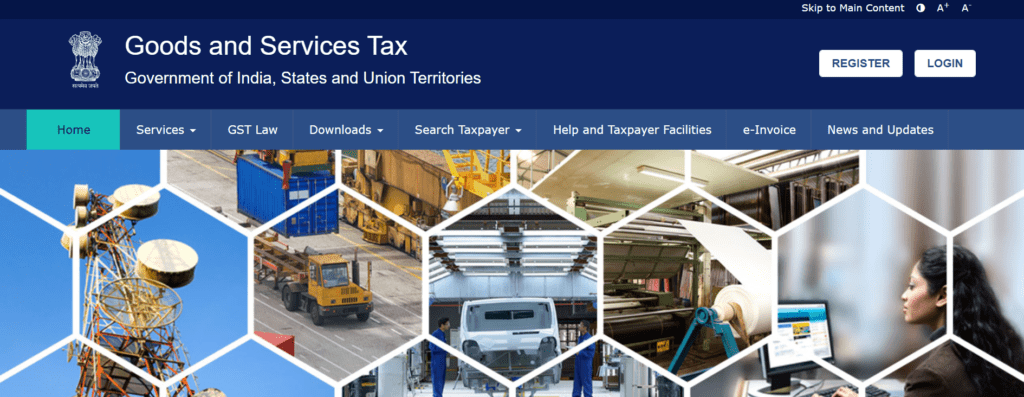
Step 1: Download GSTR-2B Monthly GST Portal
Export the GSTR-2B data and match it with the purchase register⁶¹.
Step 2: Identify Mismatches
Typical mismatch categories include:
- Invoice in books but not in GSTR-2B
- Wrong GSTIN
- Incorrect tax amount
- Duplicate entries
- Supplier has amended invoices
Step 3: Communicate with Vendors
Notify vendors who fail to upload invoices or file returns. Under GST law, ITC depends on their compliance⁶².
Step 4: Reverse Ineligible ITC
Reverse blocked, mismatched, duplicate, or ineligible ITC in GSTR-3B⁶³.
Step 5: Reclaim ITC (If Eligible)
If compliance is later completed (e.g., supplier files GSTR-1), ITC can be reclaimed⁶⁴.
10. Best Practices to Maximize ITC in 2025
10.1 Conduct Monthly Vendor Compliance Checks
Monitor whether vendors are:
- Filing GSTR-1 regularly
- Paying taxes
- Avoiding discrepancies
This protects your ITC position⁶⁵.
10.2 Automate GST Reconciliation
Use ERP or GST automation tools for comparing purchase registers with GSTR-2B. Automation reduces errors and speeds reconciliation.
10.3 Maintain Clean Documentation
Ensure invoice details match legal requirements⁶⁶.
10.4 Segregate Blocked Credits at the Source
Train your accounts team to identify Section 17(5) blocked credits⁶⁷.
10.5 Quarterly Internal ITC Audits
Internal audits help identify:
- Missed ITC
- Overclaimed ITC
- Vendor non-compliance
- Documentation gaps
10.6 Avoid Claiming ITC on Old Invoices After Deadline
The annual deadline to claim ITC for FY 2024–25 is 30 November 2025⁶⁸.
11. Frequently Asked Questions (FAQs)
Q1. Can I claim ITC if the supplier has not filed GSTR-1?
No. ITC is available only if the invoice appears in GSTR-2B⁶⁹.
Q2. What is the last date to claim ITC for FY 2024–25?
30 November 2025⁷⁰.
Q3. Is ITC available under Reverse Charge Mechanism (RCM)?
Yes, but only after the RCM tax is paid in cash⁷¹.
Q4. Can I claim ITC on motor vehicles?
Only when used for eligible purposes like goods transport or driving training⁷².
Q5. What happens if ITC is wrongly claimed?
Wrongly claimed ITC must be reversed, and interest is payable⁷³.
Q6. Are free samples eligible for ITC?
No. Free samples and gifts fall under blocked credits⁷⁴.
Q7. Can ITC be reclaimed after being reversed?
Yes, once the requisite condition is fulfilled (e.g., payment to supplier), ITC may be reclaimed⁷⁵.
12. Conclusion
The GST ITC Rules for 2025 reflect a compliance-centric approach, requiring businesses to ensure supplier reliability, strict invoice matching, and timely reconciliations. With the rise of automated validations such as GSTR-2B and risk-based vendor profiling, ITC is now a privilege granted only to disciplined taxpayers.
By following the eligibility conditions, avoiding blocked credits, conducting monthly reconciliation, and maintaining meticulous documentation, businesses can safeguard their ITC, reduce tax leakage, and ensure seamless compliance.
A consistent, well-managed ITC strategy not only improves cash flow but also protects the business from penalties, audits, and credit reversals. With GST heading toward complete technological integration, the future of ITC is precision, transparency, and accountability.
Full Footnote Reference List
Note: Each reference is cited in full legal form for accuracy and professional compliance documentation.
GST Act & Rules References (1–75)
- Section 16(1), CGST Act, 2017
- Section 16(1), CGST Act
- Section 16(1), CGST Act
- Section 31(1), CGST Act
- Rule 46, CGST Rules
- Section 16(2)(aa), CGST Act
- Rule 59(6), CGST Rules
- Rule 60(7), CGST Rules
- Explanation to Section 16(2)(b), CGST Act
- Section 16(2)(c), CGST Act
- Section 39, CGST Act
- Rule 61, CGST Rules
- Section 16(2)(d), CGST Act
- Rule 37, CGST Rules
- Rule 36(4), CGST Rules
- Section 16(4), CGST Act
- Rule 86A, CGST Rules
- Rule 86B, CGST Rules
- Circular 183/2022–GST
- Explanation to Section 17(5), CGST Act
- Section 9(3), CGST Act
- Section 9(4), CGST Act
- Rule 36(1), CGST Rules
- Section 17(5)(h), CGST Act
- Section 17(5)(a), CGST Act
- Section 17(5)(b)(i), CGST Act
- Section 17(5)(b)(ii), CGST Act
- Section 17(5)(b)(iii), CGST Act
- Section 17(5)(c), CGST Act
- Section 17(5)(d), CGST Act
- Section 17(5)(g), CGST Act
- Circular 183/2022–GST
- Section 17(5)(h), CGST Act
- Section 2(19), CGST Act
- Section 16(1), CGST Act
- Section 17(1), CGST Act
- Section 16(3), CGST Act
- Rule 43, CGST Rules
- Rule 42, CGST Rules
- Rule 43, CGST Rules
- Section 16(2), CGST Act
- Rule 37, CGST Rules
- Section 34(2), CGST Act
- Section 17(5)(h), CGST Act
- Section 18(4), CGST Act
- Rule 44, CGST Rules
- Section 31(1), CGST Act
- Section 16(2)(b), CGST Act
- Explanation to Section 16(2)(b)
- Section 16(2)(d), CGST Act
- Rule 60(7), CGST Rules
- Rule 36(1)(b), CGST Rules
- Section 34, CGST Act
- Rule 36(4), CGST Rules
- Rule 86A, CGST Rules
- Rule 46, CGST Rules
- Section 39, CGST Act
- Section 17(5), CGST Act
- Rule 37, CGST Rules
- Rules 42 & 43, CGST Rules
- Rule 60(7), CGST Rules
- Section 16(2)(c), CGST Act
- Section 16(2), CGST Act
- Rule 37, CGST Rules
- Rule 86A, CGST Rules
- Rule 46, CGST Rules
- Section 17(5), CGST Act
- Section 16(4), CGST Act
- Section 16(2)(aa), CGST Act
- Section 16(4), CGST Act
- Section 9(3), CGST Act
- Section 17(5)(a), CGST Act
- Section 50, CGST Act
- Section 17(5)(h), CGST Act
- Rule 37, CGST Rules
Stay tuned on www.taxbabuji.com.