
As artificial intelligence becomes deeply woven into daily life and business operations, one question sits at the center of every conversation: Can AI truly replace humans?
At Zoholics 2025, Sridhar Vembu, Chief Scientist at Zoho, delivered a thought-provoking keynote challenging hype-driven assumptions and breaking down AI’s real strengths, limitations, and long-term implications.
This blog distills his most powerful ideas—clear, practical, and grounded in both engineering truth and economic reality.
Introduction: AI’s Promise and Its Boundaries
AI has evolved from a curiosity to a powerful force shaping productivity, research, and digital operations. But alongside its massive potential lie mathematical constraints, ethical risks, and real-world challenges.
This post explores:
- How people use AI today
- What AI excels at
- What AI fundamentally cannot do
- Why humans remain essential
- Where the future of AI is headed
AI as a Personal Productivity Powerhouse
Today, individuals lean on AI for tasks that once required specialists—like writing optimized SQL funnel queries or generating detailed cohort analyses. Beyond generating content, AI can also review, debug, or critique its own work, amplifying personal productivity.
It’s a powerful assistant—but still an assistant.
AI as a Research Engine
With access to the vast digital corpus of human knowledge, AI can synthesize:
- Blogs
- Books
- Forums
- Academic material
- Even lightly shielded or paywalled topics
This makes AI a kind of supercharged research partner capable of summarizing entire domains within seconds.
Your Customized, On-Demand Wikipedia
Whether you want a beginner explanation or a deep technical breakdown, AI molds its output to your level. It becomes a personalized, dynamic Wikipedia—explaining anything in exactly the style you need.
The Power of Self-Critique: Let AI Fight Itself
AI isn’t perfectly accurate—but you can use its own reasoning to check its flaws.
Prompt it to critique its previous answer, or even better, pit two independent models (ChatGPT, Claude, Gemini) against each other. The resulting “Socratic dialogue” often yields far more reliable answers.
Where AI Breaks: The Big No-No Tasks
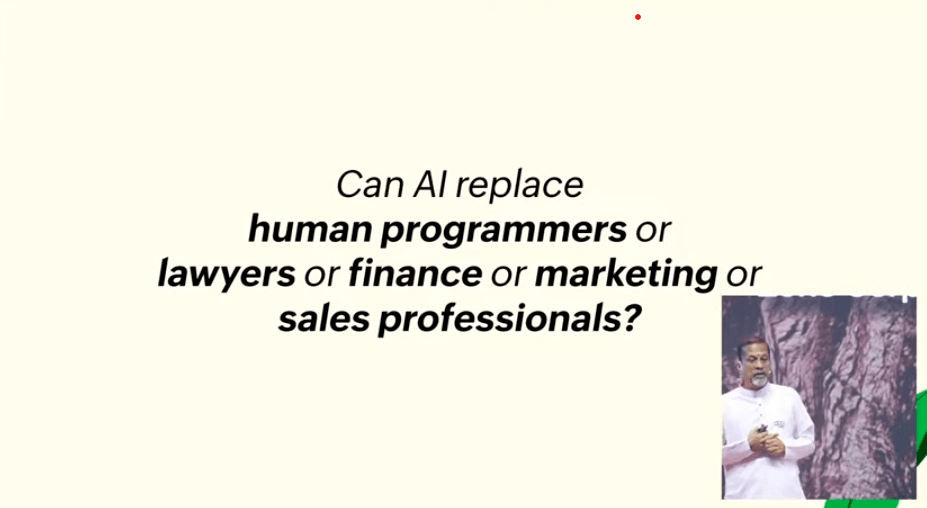
Despite its strengths, there are critical areas where AI should never operate unchecked:
- Production-bound code
- Regulatory, tax, or financial reports
- Legal briefs
- Mission-critical business presentations
- Full replacement of customer-support teams
The risk? Errors, hallucinations, compliance failures, and massive liability.
Why AI-Generated Production Code Is Dangerous
AI can churn out thousands of lines of code instantly. But:
- No human can review that much code safely
- Errors hide in complexity
- Vulnerabilities slip through
- Companies—not AI models—bear the legal risk
AI accelerates code creation but doesn’t eliminate the need for human intuition, judgment, and oversight.
The Legal Brief Disaster
Globally, lawyers have already submitted AI-generated briefs containing fabricated cases and citations. Courts have fined them, and some have faced disciplinary action.
AI is powerful—but not trustworthy in high-stakes environments.
Why Programmers Aren’t 10× Faster Yet
Even though AI writes code quickly, humans must still understand, inspect, and validate it.
And reading code is far harder than writing it.
Large codebases multiply the risk of unintended side effects—and this fear slows programmers down, not speeds them up.
The Catastrophic Risk of Hallucination
AI occasionally invents facts.
A hallucination in a product description is harmless.
A hallucination in a payroll, healthcare, or payment system is catastrophic.
Math Says AI Can’t Fully Replace Programmers (For Now)
Two deep computer-science principles limit what AI can do:
1. The Halting Problem
No algorithm can determine for all possible programs whether they will finish running.
2. Rice’s Theorem
You cannot automatically verify deep properties of arbitrary programs—like completeness, safety, or correctness—with 100% certainty.
These mathematical walls aren’t marketing limitations—they’re structural realities.
Where AI Really Boosts Developer Productivity
UI development is where AI shines:
- Highly repetitive
- Pattern-heavy
- Large amounts of boilerplate
Like how lawyers reuse contract clauses, UI code benefits immensely from AI.
But core logic, security, and business-critical systems remain human-heavy.
AI in Business: What Works and What Doesn’t
AI Augments Customer Support—not Replaces It
AI excels when paired with humans:
- Faster responses
- Better context
- Improved customer satisfaction
- Lower employee burnout
But full automation often backfires.
Transparency Is Essential
Customers must know when they’re interacting with AI.
Anything else is unethical—and increasingly illegal.
The Economics: The 20–30% Workforce Shock
Hundreds of billions in AI investment is based on one expectation:
“AI will replace or drastically reduce the need for expensive knowledge workers.”
The economic dream: 50% fewer workers with the same output.
But history tells a different story.
The Pricing Paradox
If programmers become 10× more productive, either:
- companies build 10× more software, or
- software prices collapse
Just as agricultural overproduction lowers prices, AI-driven code generation could deflate software value—unless new business models emerge.
The Future: AI + Compilers
Sridhar Vembu’s most exciting frontier is the fusion of AI reasoning with compiler precision.
This could unlock:
- 10× to 100× productivity
- Verified-safe code
- Reduced bugs
- More trustworthy systems
But it will take major breakthroughs in both math and engineering.
The True Value of Tomorrow’s Software
As AI reshapes the landscape, one truth emerges:
The future of software isn’t about speed—it’s about trust.
Businesses will pay a premium for systems that guarantee:
- privacy
- safety
- correctness
- zero hallucinations
Especially in mission-critical fields like payroll, payments, and compliance.
Conclusion: Humans Aren’t Going Anywhere
AI is powerful.
AI is transformative.
But AI is not a replacement for human judgment, ethics, intuition, or accountability.
As Sridhar Vembu emphasized, AI’s future is not human replacement, but human amplification—where people remain at the center, and AI becomes the tool that elevates what we’re capable of achieving.